French Drain vs Sump Pump: Which Does Your Basement Need?
Water in the basement, soggy lawn, damp foundation walls — the fix depends on where the water comes from. Here is the plain-English difference between a French drain and a sump pump, when you need one, and when you need both.
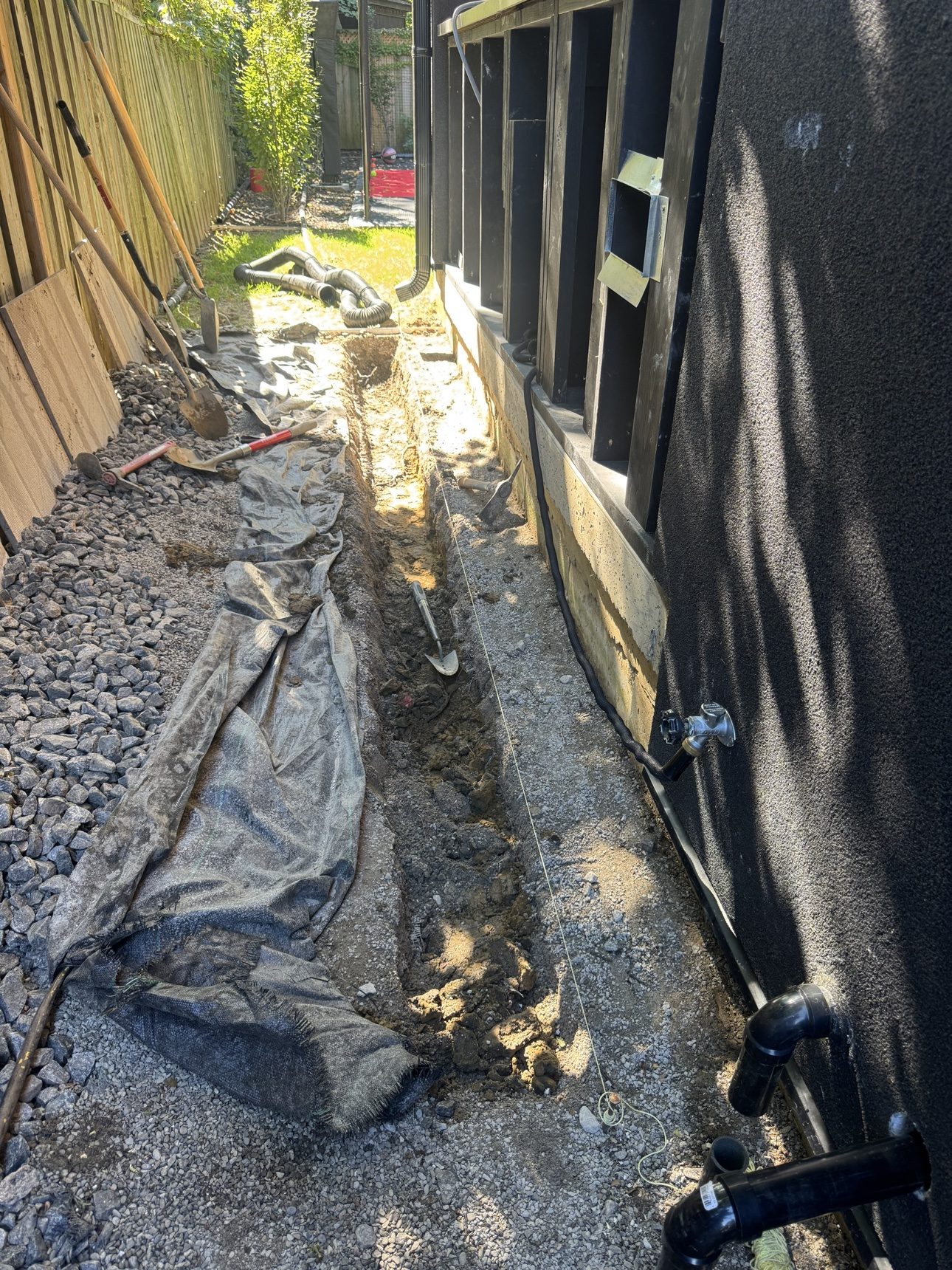
The one-sentence difference
A French drain moves water away — it is a gravel-filled trench with a perforated pipe that collects groundwater and surface water and carries it somewhere safe. A sump pump removes water — it sits in a pit and actively pumps collected water out and away from your foundation.
They are not competitors. In most wet-basement jobs they work as a team: the drain collects, the pump ejects.
Side by side
How the two systems compare:
| French drain | Sump pump | |
|---|---|---|
| What it does | Passively collects groundwater and surface water along a trench | Actively pumps collected water out of a pit |
| Needs power? | No — gravity does the work | Yes — consider battery backup |
| Best for | Soggy yard, water pooling at foundation, high water table | Water entering the basement, rising pit water |
| Where it goes | Alongside the foundation (exterior) or inside the basement perimeter | A pit at the lowest point of the basement |
| 2026 cost range | $20–$50 per linear foot (Angi, 2026); typical project $2,000–$7,000 | See our sump pump cost guide |
| Lifespan | 30–40 years installed properly (Canadian Rooter, GTA) | 8–15 years depending on pump quality |
| Maintenance | Inspect the outlet yearly; rarely clogs if wrapped in fabric | Test twice a year; clean the pit |
Cost sources: Angi, 2026 yard drainage data; Canadian Rooter, Toronto/GTA.
Which one do you need?
Match your symptom to the fix:
- Water pools in the yard or against the foundationFrench drain (exterior) — intercept the water before it reaches the house. Often paired with regrading.
- Damp basement walls or seepage at the wall-floor jointInterior French drain + sump pump — the drain collects at the base of the wall and the pump ejects it. Effective against hydrostatic pressure in Toronto's clay soil.
- Standing water in the basement after stormsSump pump first, then look at exterior drainage — the pump handles the emergency, the drain prevents the next one.
- Downspouts dump water at the foundationNeither yet — extend and bury the downspouts first (see our fall waterproofing checklist). The cheapest fix is often the right one.
- Sewer backup into the basementBackwater valve — a different problem from groundwater. Toronto subsidizes up to $1,600 per valve (see our subsidy guide).
- High water table, chronic dampnessExterior French drain + sump pump together — the full defence. This is the classic GTA combination.
How a French drain installation goes
Six steps, usually one to three days depending on length and soil:
- Locate utilitiesOntario One Call (1-800-400-2255) marks gas, hydro and telecom before any digging — free and required by law.
- TrenchA mini excavator digs the trench — typically 12–24 inches deep for yard drains, deeper along foundations — with the right slope toward the discharge point.
- Fabric + gravel bedGeotextile fabric lines the trench, then a bed of washed gravel goes in. The fabric is what keeps fine soil from clogging the system for decades.
- Perforated pipeThe pipe is laid holes-down on the gravel bed so water rises into it and flows away by gravity.
- Wrap and backfillMore gravel over the pipe, fabric wrapped closed, then backfill and topsoil — or a grate for surface-water sections.
- Discharge + testThe line discharges to a sump pit, dry well, swale or legal storm connection, then we flood-test the whole run before closing up.
Common questions
Can a French drain replace a sump pump?
Not really — they do different jobs. A French drain collects water by gravity; if water still reaches your basement floor, a sump pump is what gets it out. Many GTA homes have both.
Interior or exterior French drain?
Exterior drains stop water before it reaches the foundation — best when you have access and the yard can be dug. Interior drains are used when exterior access is limited or waterproofing is needed inside; they are more expensive per foot (around $48–$102/linear ft — published drainage cost estimator; estimate — to confirm for your GTA property) because the basement floor must be cut.
How much does a French drain cost in the GTA?
2026 references put exterior French drains at $20–$50 per linear foot, with typical residential projects of $2,000–$7,000 (Angi). GTA contractors typically quote $3,000–$10,000 depending on length, depth, materials and access (Canadian Rooter). Get a free on-site estimate for your property.
Do I need a permit?
Often, yes — especially if tying into a storm system or altering drainage. We check your municipality's requirements as part of the estimate.
Will it freeze in winter?
Proper depth and drainage design prevent freezing issues in most cases (Canadian Rooter). The line must slope so water never sits in it.
Does Pisces do both?
Yes — exterior and interior French drains, sump pit excavation, discharge-line trenching, grading and downspout burial. Pump electrical hookup goes to a licensed plumber, and we coordinate it.
Get your free on-site assessment.
Tell us where the property is and what you are dealing with. We will visit, look at the grading and drainage, and give you an itemized estimate for the groundwork — plus honest advice on whether you also need a licensed plumber for the pump itself. Workmanship warranty available on request.